
Welcome to the heart of our art and culture blog. This page is your starting point — a place where curiosity meets clarity. Whether you are taking your very first steps into the world of art or you already visit museums with a critical eye, this category was designed as a welcoming space where complex ideas are broken down, questions are answered, and every artwork becomes a story worth understanding. Think of this blog as a friendly guide walking beside you through galleries, centuries, and creative movements, translating the sometimes-intimidating language of art into something everyone can enjoy.
In a world saturated with fast content, taking the time to understand art is almost an act of resistance. Art is not decoration; it is a mirror of societies, a record of human emotion, and a conversation across generations. A culture blog serves as a bridge between institutions — museums, galleries, academies — and everyday readers who simply want to understand what they are looking at.
Consider an analogy: visiting a museum without any background is like listening to a song in a foreign language. You may feel the rhythm and the emotion, but the meaning escapes you. Reading thoughtful articles is like learning the lyrics. Suddenly, everything clicks. A Rothko no longer looks like « just a red rectangle » — it becomes an immersive experience about contemplation and transcendence.
Art history can feel like an overwhelming catalog of « -isms »: Impressionism, Cubism, Surrealism, Expressionism. But movements are not dry categories — they are reactions. Each one responds to what came before it, like successive waves reshaping a shoreline.
Imagine a conversation across time. Classical academic painting set the rules of beauty and proportion. The Impressionists broke those rules by stepping outside, chasing fleeting light with quick, visible brushstrokes. Then the Cubists asked: why paint what the eye sees, when the mind knows objects from multiple angles at once? Each movement is a question posed to the previous answer.
Our articles in this category explore these movements in depth, always with the same promise: no prior knowledge required, just curiosity.
One of the most empowering things a culture blog can teach is visual literacy — the ability to look slowly and deliberately. Most museum visitors spend only a few seconds per artwork. Yet a painting rewards patience the way a novel rewards turning pages.
Here is a simple method you can apply in front of any artwork, in a museum or on a screen:
For example, take Vermeer’s Girl with a Pearl Earring. At first glance: a young woman glancing over her shoulder. Look longer: the luminous pearl, the ambiguous expression, the dark background that isolates her like a stage. Suddenly you are not just looking — you are wondering who she was, and that wondering is exactly what great art invites.
Art is not confined to framed canvases. Culture lives in architecture you walk past daily, in film and photography, in music, in street art, in the design of ordinary objects. One of the missions of this blog is to widen the lens: a cultural article can be as much about a cathedral façade or a graphic novel as about a Renaissance altarpiece.
This broader view matters because it dismantles the myth that culture is reserved for an elite. Culture is everything humans create to give meaning to their lives — and that includes the playlist on your phone.
Finished artworks look inevitable, as if they could never have been otherwise. In reality, every masterpiece hides a laboratory of failed attempts, doubts, and revisions. Understanding the creative process humanizes artists and demystifies creativity itself.
Picasso produced tens of studies before his major canvases; many sculptors leave behind rows of maquettes exploring a single gesture. The lesson for beginners is liberating: creativity is not a lightning bolt of genius but a practice — sketch, reject, refine, repeat.
In our articles, we regularly pull back the curtain on these backstage moments, because knowing how art is made makes looking at it twice as rich.
Art and culture are fragile. War, neglect, climate, and even over-tourism threaten what previous generations left us. A serious culture blog cannot ignore questions of conservation and heritage: how do we restore a fresco without erasing its history? Who decides which works deserve protection? What does it mean when a cultural object is repatriated to its country of origin?
These debates have no simple answers, and that is precisely why they deserve clear, balanced explanations rather than slogans. Restoration of Leonardo’s The Last Supper, for instance, took decades and sparked passionate controversy: how much of the original survives, and how much is the restorer’s hand? Questions like these show that culture is not a fixed inheritance — it is actively negotiated by every generation.
This category is designed as a progressive journey. You can wander freely, but here is a suggested path if you want to build your knowledge methodically:
Above all, remember this: there is no exam at the end. The goal of an art and culture blog is not to turn you into a scholar, but to turn looking into seeing, and seeing into pleasure. Every article here is an open door — walk through as many as you like, at your own pace, and let curiosity lead the way.
Culture rewards those who return to it. Like learning a language, fluency comes through regular, joyful practice. This blog will keep accompanying you with clear explanations, concrete examples, and genuine passion — because art belongs to everyone who takes the time to look. Welcome aboard; the conversation starts now.
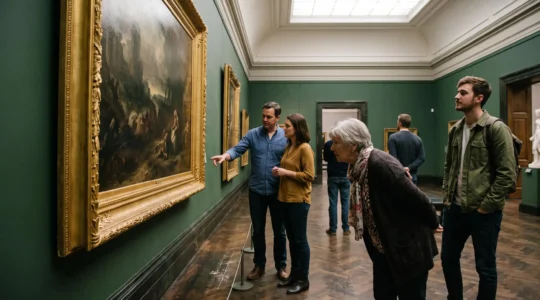
A painting that provoked outrage in nineteenth-century Paris can become a celebrated museum masterpiece. A religious image rejected by its original commissioners can enter a prestigious collection. A landscape admired for its expressive use of empty space may puzzle viewers…
Lire la suite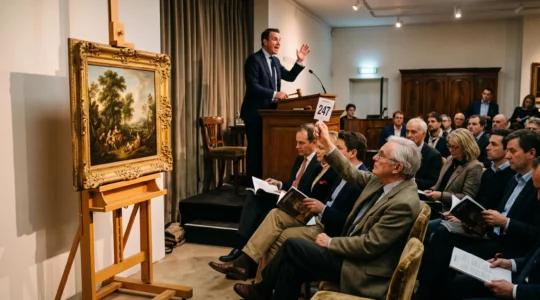
Two paintings can display comparable technical skill, use similar materials and offer equally compelling visual experiences, yet command prices separated by several orders of magnitude. The difference is not necessarily evidence that one buyer possesses better taste. It reflects how…
Lire la suite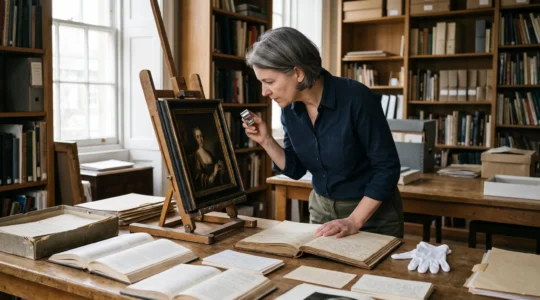
A previously undocumented painting, an exhaustive provenance reconstruction or years of archival investigation can represent substantial scholarly labour without necessarily producing a publishable journal article. The decisive distinction is between establishing information about an artwork and demonstrating how that information…
Lire la suite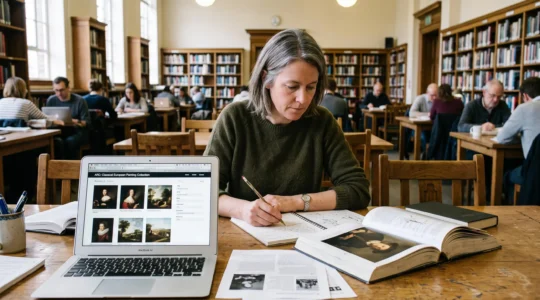
A researcher investigating a nineteenth-century painting once needed access to specialist libraries, institutional photographic collections and museum catalogues that might be distributed across several countries. Today, substantial parts of that research can begin from a public library or home computer….
Lire la suite