
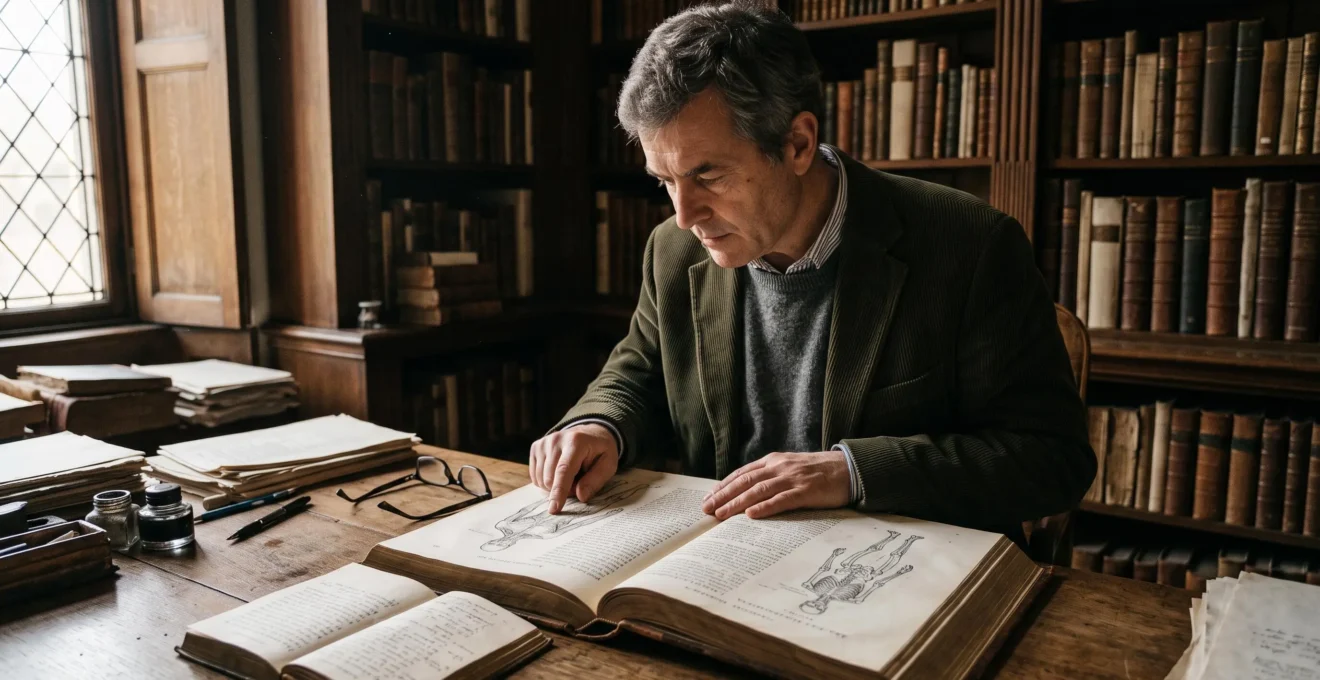
Renaissance art did not turn away from God so much as reconsider how divine meaning could be expressed through human existence. Between the fourteenth and sixteenth centuries, humanist scholarship encouraged artists and patrons to treat individual identity, bodily proportion, emotion and worldly experience as subjects worthy of sustained intellectual attention.
The intellectual foundation was Renaissance humanism: a movement that revived classical literary and philosophical traditions while continuing to operate, in many cases, within Christianity. Its emphasis on human agency, moral reasoning, education and historical memory changed both what art represented and what society expected artists to accomplish.
This transformation was neither sudden nor universally secular. Religious commissions remained central, and powerful institutions continued to regulate artistic expression. The significance of the Renaissance lies instead in a changed relationship between humanity, knowledge and sacred truth: the observable human world increasingly became a legitimate means of understanding broader philosophical and theological questions.
The intellectual foundations of Renaissance art
- Humanism expanded artistic subject matter: classical learning encouraged the representation of individual identity, human emotion and physical experience without necessarily rejecting Christian belief.
- Art became a vehicle for intellectual and social identity: portraiture, perspective, anatomy and patronage connected philosophical ideas with visual innovation and political ambition.
- The transformation remained contested: religious censorship, political instability and the emergence of Mannerism challenged the optimistic ideals associated with High Renaissance harmony.
- Why Did Reading Ancient Greek Philosophy Make Artists Stop Painting Only Religious Scenes?
- How Did Humanism Transform Portrait Painting From Craft Work to Prestigious Art?
- God-Focused vs Human-Focused: How Did Renaissance Art Visually Represent This Philosophical Shift?
- The Counter-Reformation Censorship: When Humanist Art Was Declared Heretical
- The Crisis Point: When Did Renaissance Faith in Human Perfectibility Start to Fail?
- Why Do 90% of Renaissance Artworks Contain Hidden Propaganda for Their Wealthy Patrons?
- Why Do Renaissance Compositions Feel Orderly While Baroque Paintings Seem Chaotic and Dynamic?
- How Did Political Censorship Determine What Renaissance Artists Could Publicly Display?
Why Did Reading Ancient Greek Philosophy Make Artists Stop Painting Only Religious Scenes?
Ancient Greek and Roman philosophy helped Renaissance artists expand their subjects by giving human experience renewed intellectual importance. Classical learning encouraged attention to moral agency, bodily proportion, individual achievement and the observable world. Yet artists did not simply abandon Christian imagery: humanist ideas frequently transformed religious scenes from within, making emotion and physical presence central to their meaning.
The recovery, translation and circulation of classical writings supplied Renaissance intellectuals with philosophical alternatives to exclusively scholastic approaches to knowledge. Greek scholars arriving in Italy before and after Constantinople fell in 1453 contributed to this process, although classical learning had been developing in Western Europe for generations.
Florentine humanist circles studied Plato, Aristotle, Cicero and other ancient authors as sources for ethical reflection, rhetoric, civic participation and understandings of human nature. The resulting interest in the human person did not require the disappearance of theological thought.
Giovanni Pico della Mirandola‘s Oration on the Dignity of Man, composed in 1486, became a particularly influential expression of human intellectual freedom and the capacity for self-cultivation. It illustrates a broader philosophical atmosphere rather than proving that any particular painting directly resulted from Pico’s arguments.
Central to this transformation was the studia humanitatis, an educational programme encompassing grammar, rhetoric, history, poetry and moral philosophy. Unlike a general admiration for antiquity, it offered practical methods for studying texts, interpreting human action and articulating ethical judgments.
Artists participated in this intellectual culture to varying degrees, while patrons and scholars helped connect artistic production with classical ideas.
The change can be understood as Christian humanism expressed visually. Michelangelo‘s Pietà, for example, invites contemplation through Mary’s bodily relationship with the dead Christ and the emotional implications of suffering. His David celebrates physical concentration and human resolve while retaining a biblical identity.
These developments did not originate from nothing. Byzantine icon traditions, Gothic naturalism and Franciscan devotion to Christ’s humanity had already created meaningful precedents for religious empathy.
As The Met’s Northern Renaissance Gallery visiting guide illustrates, classical interests and Christian subjects continued to coexist in Renaissance visual culture, particularly in Northern Europe.
Humanism therefore changed the intellectual possibilities available to artists rather than imposing a universal secular agenda. Once the individual could carry moral and philosophical significance, the representation of recognizable people also acquired new prestige.
How Did Humanism Transform Portrait Painting From Craft Work to Prestigious Art?
Humanism elevated portrait painting by making individual identity, intellectual achievement and personal remembrance culturally valuable. Portraits increasingly represented not only hereditary rulers but also merchants, scholars, patrons and artists. At the same time, painters gained recognition for judgment and invention, allowing portraiture to become a respected expression of identity rather than merely a record of physical appearance.
In many medieval settings, painting operated through organized workshops and guild structures. Those structures persisted during the Renaissance, but expectations surrounding artistic authorship changed.
Court appointments, scholarly relationships and written assessments of artistic achievement increasingly presented accomplished painters as individuals possessing exceptional intellectual and creative abilities.
Giorgio Vasari‘s sixteenth-century Lives of the Most Excellent Painters, Sculptors, and Architects exemplifies this shift. His biographies portrayed artists as distinctive personalities whose achievements merited historical preservation, although his account also reflected particular regional preferences and judgments.
The cultural logic extended to the sitter.
Humanist ideals of fama, or enduring reputation, encouraged patrons to commission images that would preserve their identities beyond their lifetimes. Banking families, merchants, literary figures and scholars could use portraits to communicate cultivated status alongside economic or political standing.
Portrait conventions became more varied. A three-quarter pose could establish a sense of bodily presence and psychological engagement unavailable in some more formal profile representations. Books, letters, instruments and domestic interiors could suggest learning, occupation or cultivated taste.
Leonardo da Vinci‘s Lady with an Ermine demonstrates the growing sophistication of bodily movement and psychological suggestion. Its meaning also depends on the sitter’s courtly identity and the emblematic significance of the animal, not simply on an assertion of intellectual independence.
Northern Renaissance portraits, including those associated with Hans Holbein the Younger, similarly incorporated objects and settings that communicated social position, education and personal identity.
The historical importance of these developments is documented in The Metropolitan Museum’s Renaissance portrait exhibition, which connects fifteenth-century portraiture with commemoration, politics, individuality and changing artistic conventions.
Portraiture also diversified the market for artistic production. Secular commissions created opportunities beyond exclusively devotional imagery, although artists often remained dependent on wealthy clients, courts and religious institutions.
An important qualification is that Renaissance likeness was not neutral documentation. Sitters and artists negotiated appearances according to social decorum, beauty, dynastic expectations and flattery. A portrait might convey dignity through calculated idealization while suppressing evidence of vulnerability or conflict.
The elevation of the human subject was therefore also an elevation of carefully managed public identity. Perspective and anatomy would extend that transformation from the representation of individuals to the construction of entire pictorial worlds.
God-Focused vs Human-Focused: How Did Renaissance Art Visually Represent This Philosophical Shift?
Renaissance artists expressed a more human-centered worldview through linear perspective, anatomical observation, believable settings and increasingly complex emotional relationships. Sacred figures were placed within spaces that viewers could imagine inhabiting. The change did not remove divine meaning: it often relocated spiritual significance into the visible human body, rational space and psychologically recognizable experience.
Linear perspective offered an especially powerful intellectual model.
By organizing pictorial space around a geometrically determined viewpoint, painters made the observer’s position fundamental to visual representation. Filippo Brunelleschi’s perspective experiments and Leon Battista Alberti’s theoretical writing helped establish methods for constructing coherent architectural environments.
This should not be confused with a philosophical declaration that humanity had replaced God. Rather, it suggests that human perception had become an important principle of pictorial organization.
Masaccio’s Holy Trinity demonstrates how sacred theology could be represented through persuasive architectural space. The religious subject remains traditional, but its apparent physical setting gives viewers a newly structured relationship to the divine event.
Leonardo’s Last Supper similarly organizes a sacred narrative around recognizable human reactions. The apostles respond through gesture, facial expression and bodily movement, while the composition gives those reactions a carefully controlled spatial order.
Earlier medieval religious images also employed sophisticated narrative and emotional devices. Hierarchical scale and gold-ground settings remained valid expressive choices rather than simply defective attempts at realism.
The comparison concerns different visual priorities, not a universal progression from inferior to superior art.
Anatomical study supplied another route into philosophical meaning.
Leonardo’s Vitruvian Man explores relationships between bodily proportion, geometry and architectural theory. Michelangelo’s figures on the Sistine Chapel ceiling give physical form to sacred narratives through muscular bodies, deliberate gestures and complex spatial relationships.
In such works, the human body can appear as an expression of intelligible order within creation.
A comparative framework makes these distinctions easier to identify:
| Feature | Common medieval conventions | Developed Renaissance approaches |
|---|---|---|
| Spatial organization | Symbolic settings, layered depth or hierarchical arrangements | Geometrically constructed spaces and coherent viewpoints |
| Human anatomy | Stylized bodies suited to religious and narrative purposes | Greater emphasis on observed proportion, movement and volume |
| Emotional expression | Established devotional gestures and iconographic conventions | Individualized reactions and psychologically interconnected figures |
| Scale and emphasis | Importance sometimes communicated through relative figure size | Meaning often established through placement, gesture and composition |
| Sacred significance | Frequently signaled through iconographic distinction | Frequently communicated through embodied experience within believable space |
These tendencies overlap considerably. Different regions, patrons and artists combined symbolic and naturalistic approaches in distinct ways.
Five steps for identifying humanist ideas in a Renaissance artwork
- Locate the viewing point. Trace major architectural lines and record whether they converge toward a common vanishing point. Deliverable: an annotated perspective diagram.
- Examine bodily representation. Identify proportions, weight distribution and gestures that suggest observation or idealization. Deliverable: three annotated anatomical details.
- Map emotional relationships. Note where figures look and how their gestures connect. Deliverable: a short diagram of the principal psychological interactions.
- Identify historical and classical references. Record clothing, architecture, symbols and objects that place the subject in a sacred, ancient or contemporary setting. Deliverable: a reference inventory distinguishing observations from interpretations.
- Test the philosophical reading. Explain how space, bodies and setting contribute to human agency or divine meaning, including one possible alternative interpretation. Deliverable: a concise evidence-based analytical paragraph.
Renaissance humanism is consequently visible not simply in what paintings depict but in how they invite viewers to understand the relationship between perception, human dignity and divine order. That interpretive freedom also raised questions about which forms of representation religious authorities would accept.
The Counter-Reformation Censorship: When Humanist Art Was Declared Heretical
The Counter-Reformation placed new restrictions on religious imagery, especially where nudity, ambiguous symbolism or theatrical invention appeared to undermine religious instruction. Yet it is misleading to say that humanist art as a whole was declared heretical. Ecclesiastical authorities generally scrutinized specific representations and their suitability for worship, making artistic decorum a contested boundary between creativity and doctrine.
The Council of Trent, convened between 1545 and 1563, became an institutional turning point for Catholic religious culture.
Its final-session decree concerning sacred images reaffirmed their legitimate educational and devotional functions while condemning abuses and emphasizing appropriate religious representation.
The decree did not prescribe a single artistic style or establish a universal prohibition against classical forms. Its interpretation and implementation developed through bishops, religious institutions, patrons and subsequent reform literature.
This distinction matters because the mature Renaissance had already cultivated anatomical experimentation, classical references and increasingly elaborate compositions.
Religious critics could perceive some of those innovations as distracting, indecorous or insufficiently intelligible.
Paolo Veronese’s interrogation in 1573 provides a documented example.
His large painting intended to represent the Last Supper included figures and details that troubled ecclesiastical investigators. Among the questioned elements were people whose presence appeared inappropriate to the religious subject.
The painting subsequently became known as Feast in the House of Levi, allowing its elaborate setting and secondary figures to remain within a different biblical identification.
The case illustrates how authorities contested pictorial meaning rather than simply destroying every disputed work.
Case study: Veronese and the boundaries of religious decorum
Veronese faced ecclesiastical questioning over the figures and narrative elements included in a painting associated with the Last Supper. Its unusually elaborate social setting challenged expectations about how sacred events should be represented.
The work became identified as Feast in the House of Levi. This documented controversy demonstrates the negotiation of religious acceptability through interpretation and subject identification, rather than proving a universal suppression of Renaissance artistic invention.
As explained in Smarthistory’s analysis of the Council of Trent and artistic reform, the period generated significant debates over appropriate religious representation, including controversies involving major artists.
Michelangelo’s Last Judgment likewise became a focus of criticism over its nude figures.
Following Michelangelo’s death, Daniele da Volterra painted draperies over selected figures. These interventions illustrate how changing theological and moral expectations could physically alter an artwork.
Conservation and restoration therefore confront not only questions of material preservation but also historical decisions about which stages of an artwork’s existence should remain visible.
The apparent paradox is that Counter-Reformation art could remain intensely human in its emotional language.
Luis de Morales’s devotional imagery and, later, Caravaggio’s naturalism demonstrate how bodily suffering, recognizable figures and dramatic emotion could serve Catholic religious purposes.
The conflict was therefore not simply between divinity and humanity. It concerned who controlled the interpretation of humanity within sacred images.
These restrictions developed alongside deeper intellectual and political upheavals. Even before religious reform reached its institutional maturity, the optimism associated with Renaissance harmony had begun to encounter severe historical pressures.
The Crisis Point: When Did Renaissance Faith in Human Perfectibility Start to Fail?
Renaissance confidence in human perfectibility did not collapse at a single moment, but the political and religious crises of the early sixteenth century exposed tensions within its ideal of harmonious order. The Italian Wars, the Reformation and the Sack of Rome in 1527 provided a particularly powerful context for artistic experimentation with instability, distorted proportion and spiritual anguish.
The High Renaissance is frequently associated with balanced compositions, idealized anatomy and a belief that mathematical relationships could make the world intelligible.
That interpretation captures important artistic ambitions, but it should not be mistaken for a universal philosophical consensus. Humanists also wrote extensively about uncertainty, moral failure and the limits of knowledge.
Nevertheless, the historical environment changed dramatically.
The Italian Wars destabilized political arrangements across the peninsula. The Reformation challenged Western Christianity’s institutional unity. Rome’s violent sack in 1527 became an especially memorable symbol of the vulnerability of cultural and ecclesiastical power.
Later scientific developments further complicated inherited intellectual frameworks.
The publication of Copernicus’s heliocentric theory in 1543 and Galileo’s condemnation in 1633 belong to a longer transformation in European natural philosophy. They should not be treated as immediate causes of sixteenth-century Mannerism.
The art itself offers a revealing, though not mechanically causal, record of changing expressive priorities.
Michelangelo’s David embodies concentrated physical possibility. The figure’s idealized anatomy suggests a body capable of purposeful action.
His later Last Judgment and Florentine Pietà create markedly different experiences, emphasizing judgment, grief, bodily tension and spiritual uncertainty.
Such contrasts can illuminate an artist’s changing concerns without proving that a single cultural belief had simply disappeared.
Mannerism developed within this broader environment.
Pontormo’s Deposition employs unstable relationships between bodies and space. Parmigianino’s Madonna with the Long Neck deliberately unsettles conventional proportion.
These works cannot be explained merely as failures to achieve classical harmony. Their distortions are productive artistic decisions that invite viewers to experience elegance, intensity, uncertainty or spiritual mystery.
Even the concept of non-finito, in which part of a work appears unfinished, resists a single historical interpretation. It can result from interrupted production or conscious expressive choices, and those possibilities should be distinguished in individual cases.
The transition toward Baroque art was equally complex. Artists continued to draw on classical proportion while increasingly exploiting theatrical movement and dramatic emotion.
What weakened was not the capacity to represent human greatness but the assumption that greatness necessarily appeared through tranquil perfection. The ambitions of patrons, meanwhile, had always introduced another dimension into the supposedly universal celebration of humanity.
Why Do 90% of Renaissance Artworks Contain Hidden Propaganda for Their Wealthy Patrons?
The claim that 90% of Renaissance artworks contain hidden propaganda is not supported by a documented statistical survey. The underlying historical issue is nevertheless important: commissions often communicated patrons’ religious identities, social standing, dynastic aspirations and political alliances. Renaissance artworks could simultaneously express humanist values and advance the interests of the individuals or institutions financing them.
The word propaganda requires care in this context.
Modern usage can imply systematic political manipulation, whereas Renaissance patronage incorporated many overlapping motivations, including devotion, commemoration, civic obligation, family prestige and public legitimacy.
A donor’s presence within a sacred composition, for example, did not automatically transform a religious painting into deception. It could communicate participation in devotional culture while reinforcing the donor’s status.
Understanding that combination is essential.
Artists responded to the interests of patrons through iconography, placement, scale, heraldry and the selection of particular narratives.
A family emblem could establish ownership or affiliation. The inclusion of a patron saint could connect religious devotion with personal identity. Contemporary figures incorporated into biblical scenes could associate living individuals with sacred history.
Botticelli’s Adoration of the Magi, dated approximately 1470–1475, offers a particularly illuminating example.
The painting was commissioned by Gaspare di Zanobi del Lama for a chapel associated with Santa Maria Novella. It combined the biblical Adoration with figures understood to evoke Florentine society and the Medici family.
According to the Uffizi’s catalogue, Giorgio Vasari identified one of the Magi with Cosimo the Elder de’ Medici, while other proposed identifications remain less certain.
The composition demonstrates how devotional imagery could also communicate political proximity and social ambition.
Case study: Botticelli’s Adoration of the Magi and Florentine patronage
Gaspare di Zanobi del Lama commissioned a sacred painting incorporating figures associated with the Medici family and Florentine society. The religious setting allowed relationships between contemporary individuals and established civic elites to become visible within a devotional composition.
The documented commission supports an interpretation involving both religious devotion and social positioning. However, some individual identifications remain tentative, and the work cannot establish any numerical proportion of propagandistic Renaissance commissions.
The broader political implications extended to princely and papal commissions.
Pope Julius II sponsored ambitious artistic programmes involving Raphael and Michelangelo, connecting religious imagery, institutional authority and the monumental identity of the papacy.
Ludovico Sforza’s patronage of Leonardo’s Last Supper likewise belonged to a setting where religious observance and dynastic representation could intersect. The work’s location and commission require consideration alongside its philosophical and theological qualities.
These cases suggest a practical interpretive method: identify the commissioner, investigate the work’s original location, examine family or institutional symbols, and distinguish documented intentions from speculative iconographic readings.
Human dignity in Renaissance art was therefore never entirely separate from the power to commission, display and preserve images. The visual language that communicated those ideals would evolve as religious and political expectations changed.
Why Do Renaissance Compositions Feel Orderly While Baroque Paintings Seem Chaotic and Dynamic?
Renaissance compositions often convey stability through balanced grouping, geometric perspective and controlled movement, while Baroque artists frequently emphasize diagonals, dramatic lighting and powerful emotional action. These differences express contrasting artistic priorities rather than a universal division between rational order and chaos. Baroque dynamism was carefully designed to direct attention, intensify experience and communicate meaning.
The High Renaissance cultivated forms of pictorial coherence associated with classical balance.
Leonardo’s Last Supper establishes Christ as a compositional center through perspective, architectural structure and the grouping of the apostles. Emotional reactions unfold within a spatial system that remains legible despite their variation.
Raphael’s School of Athens similarly employs monumental architecture and carefully coordinated groups of philosophers to articulate an intellectually ordered environment.
These works make harmony visible through the relationships between individual figures and the total composition.
Baroque artists frequently pursued another kind of coherence.
Rubens’s Descent from the Cross organizes bodies and emotional attention along strong diagonals. Physical effort, fabric, light and movement intensify the viewer’s engagement with Christ’s body.
Bernini’s sculptural compositions likewise exploit implied movement and changing viewpoints, making the observer’s spatial position an active part of the encounter.
The resulting experience may feel unstable, but its apparent spontaneity emerges from deliberate formal control.
| Visual principle | High Renaissance tendency | Baroque tendency |
|---|---|---|
| Composition | Balanced groupings and stable geometric structures | Strong diagonals, overlapping forms and directional movement |
| Lighting | Frequently used to describe coherent volume and space | Frequently intensified to create drama and direct attention |
| Movement | Controlled gestures within balanced arrangements | Action, bodily tension and movement extending into surrounding space |
| Viewer engagement | Contemplation of a structured scene | Heightened emotional and spatial participation |
| Intellectual implication | Confidence in proportion and intelligible relationships | Interest in affective persuasion, embodied experience and dramatic revelation |
These are comparative tendencies, not absolute rules. Renaissance art contains expressive turmoil, while Baroque art often depends on rigorous geometry and disciplined classical principles.
The relationship to the Counter-Reformation also requires precision.
The Council of Trent encouraged religious images to instruct and support devotion, but it did not explicitly prescribe Baroque diagonals, tenebrism or dramatic theatricality.
Later Catholic artistic cultures developed emotionally persuasive solutions in response to religious and institutional priorities. Such developments interacted with court patronage, regional traditions and innovations that were not exclusively Catholic.
The philosophical contrast should likewise remain conditional. Renaissance harmony may be interpreted as confidence in an intelligible universe, while Baroque drama can suggest heightened awareness of conflict, uncertainty and transformative experience.
Neither interpretation establishes that every Baroque artist rejected humanist reason.
The shift was not from reason to irrationality but from one set of expressive priorities to another. Both depended on choices made within systems of patronage, institutional expectation and control over public imagery.
Key takeaways before examining political censorship
- Artistic visibility depended on more than philosophical conviction: patrons and institutions also controlled commissions, locations and audiences.
- Restrictions operated differently across churches, courts and cities; a permissible image in one setting might become contentious in another.
- The surviving artistic record must be interpreted with attention to works that were modified, restricted, destroyed or never publicly displayed.
How Did Political Censorship Determine What Renaissance Artists Could Publicly Display?
Political censorship shaped Renaissance art through the combined influence of churches, civic governments, princely courts and professional institutions. These authorities determined which subjects could be commissioned, where artworks appeared and who could encounter them. Artists responded through negotiation, self-censorship, allegory and selective disclosure, creating a visual culture shaped by both intellectual ambition and unequal access to public expression.
Renaissance censorship did not operate through a single comprehensive authority.
The Catholic Church regulated aspects of religious imagery, while city governments and ruling families could influence what appeared in civic or politically sensitive settings. Guilds also controlled important dimensions of artistic practice, although their regulations should not be treated as uniformly equivalent to political censorship.
Patrons exercised another form of power. Financial dependence could encourage artists to avoid imagery that might embarrass sponsors or jeopardize future employment.
Control also depended on location.
A painting intended for a private chamber could address classical mythology or sensual themes differently from an altarpiece designed for communal worship. Restricted access to a courtly collection could shape an artwork’s audience without necessarily constituting formal prohibition.
Florence under Girolamo Savonarola demonstrates how religious reform and civic power could intersect.
The Bonfire of the Vanities in 1497 became a striking episode in campaigns against objects considered morally dangerous or luxurious.
Paintings and other visual objects could fall within the scope of such campaigns, but specific claims about the destruction of individual masterpieces require reliable documentation.
Botticelli’s later religious interests are sometimes connected to Savonarola’s influence. That relationship deserves careful consideration rather than treatment as proof that direct censorship mechanically dictated his entire artistic development.
Artists possessed strategies for negotiating these conditions.
Classical mythology offered one possible language for representing subjects that might have been more controversial in explicitly contemporary settings. Figures such as Venus or Diana could participate in learned allegories associated with beauty, virtue, desire or moral education.
However, mythological subject matter was not automatically a disguise for forbidden beliefs. Many such works openly expressed interests shared by their patrons and intended audiences.
An allegorical reading should be supported by the artwork’s original setting, iconography, commission and relevant historical evidence. Without that evidence, claims of coded dissent risk converting ordinary artistic complexity into speculative conspiracy.
The Medici Chapel presents another interpretive challenge.
Michelangelo’s funerary sculptures belong to a politically significant dynastic setting, but their ambiguous allegorical meanings cannot automatically be treated as covert political resistance. The distinction between documented patronage, plausible interpretation and unsupported claims of secret messaging remains essential.
This broader political economy differs from the specific theological scrutiny associated with Counter-Reformation reform.
Ecclesiastical controversies such as Veronese’s concern the acceptability of particular religious representations. Political and institutional controls, by contrast, also determine the production, ownership, placement, accessibility and survival of images.
Consequently, the works available to modern audiences do not constitute an unfiltered record of Renaissance artistic thought.
Loss, alteration, restricted display and selective preservation influence which philosophical and aesthetic experiments can still be studied.
A rigorous interpretation of Renaissance art should therefore begin with the work’s subject, material form, commissioner, original location and documented reception. Comparing those elements with its philosophical content reveals how ideas about human dignity developed within structures of authority rather than outside them.
Did Renaissance humanism reject belief in God?
No. Renaissance humanism primarily concerned education, classical learning, moral philosophy and the capacities of human beings. Many humanists remained committed Christians. In visual art, humanist approaches often strengthened the emotional and physical representation of sacred subjects rather than replacing religion with secular imagery.
What is the difference between Renaissance humanism and modern secular humanism?
Renaissance humanism developed around the study of classical literature, rhetoric, history and moral philosophy, frequently within Christian intellectual institutions. Modern secular humanism generally grounds ethical and philosophical inquiry in human experience without requiring religious authority. Their shared concern with human agency should not obscure their different historical foundations.
Why did anatomical accuracy become intellectually important in Renaissance art?
Anatomical observation allowed artists to represent proportion, movement and physical presence more convincingly. For some Renaissance thinkers, bodily harmony also connected artistic practice with mathematics, natural philosophy and concepts of divine order. Anatomical study consequently offered both practical artistic knowledge and a means of investigating humanity’s place in the natural world.
Can a Renaissance portrait be considered historically accurate if the sitter was idealized?
Yes, provided accuracy is understood in relation to the portrait’s historical purpose. Idealization may reveal expectations about beauty, virtue, status and remembrance even when it obscures aspects of physical appearance. Researchers should distinguish observable likeness, artistic convention and the social identity a patron intended to communicate.
How can historians distinguish humanist symbolism from speculative hidden messages?
They compare visual details with documented commissions, contemporary writings, established iconographic conventions and the artwork’s original location. Interpretations supported by multiple independent forms of evidence are stronger than claims based only on suggestive resemblance. Where patron intentions or symbolic identifications remain uncertain, that uncertainty should remain explicit.